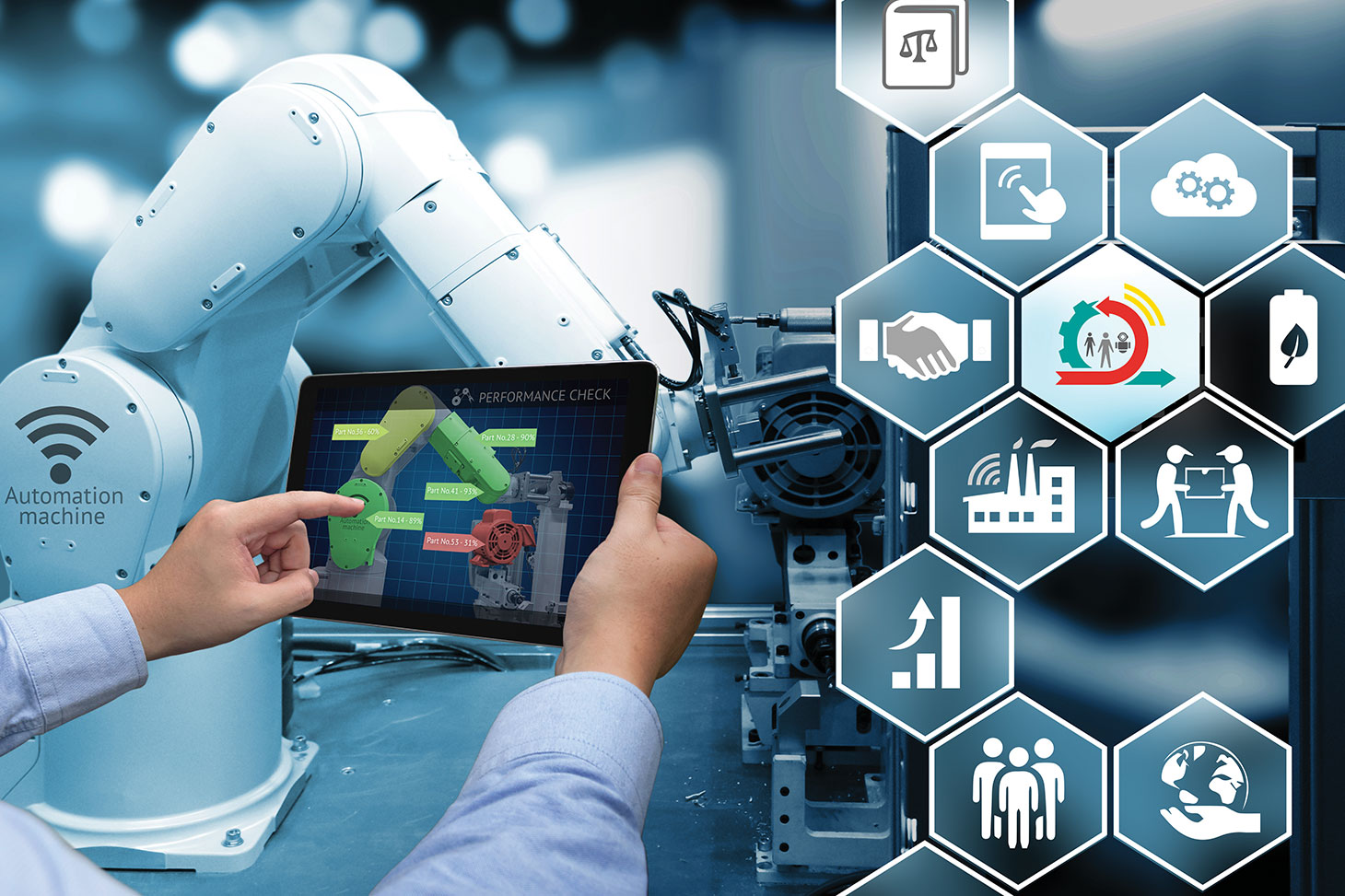
Designing circular industrial systems for the Industry of the Future.
The Circular project aims to develop circular industrial systems capable of transforming end-of-life products into high-value-added products. The consortium will focus on developing the enabling conditions and technologies necessary for the creation of these new circular industrial systems. This work will contribute to the development and implementation of methods and technologies for the Industry of the Future.
The Issues
Circular industrial systems will enable companies to provide solutions tailored to market needs, with competitive, customized, state-of-the-art products that minimize the use of material and energy resources. Product circularity makes it possible to manufacture new products from discarded ones. For example, batteries for the automotive sector (800,000 metric tons per year on the European market) can be repurposed into batteries for other electrical equipment, thereby utilizing 80% of their unused capacity. To achieve this, circular industrial systems will need to be particularly agile, requiring a rethinking of real-world human-machine collaborations, the implementation of digital solutions to optimize their performance in practice, and the design of the necessary new organizational structures.
Interdisciplinarity
This project brings together 12 research teams and 3 technology platforms from the fields of engineering, social sciences, and information and communication sciences and technologies, which will address the multidisciplinary challenges posed by the Industry of the Future. We must build a scientific community capable of harnessing innovations in digital science and technology (big data, cloud computing, the Internet of Things, virtual and augmented reality, etc.) while rethinking the role of people in industry and the new professions that will emerge in the industrial organization of the future.
The site's structure...
The Industry of the Future involves changing the way products are designed, manufactured, distributed, and recycled in order to meet economic, societal, and environmental demands. The goal of this project is to shift from a linear “produce-consume-dispose” production and consumption model to a circular “produce-consume-reuse” model. This paradigm shift requires a different approach to the research questions at hand. Consequently, several research teams from different fields have joined forces to examine not only new technologies but also their applications and implementation within new organizational structures. Ultimately, the goal is to form a research group capable of providing more comprehensive solutions to the industrial sector, particularly regarding the challenge of ensuring the agility of future industrial systems.
... and its international visibility
Over the past five years, the major industrialized nations have implemented significant programs for the Industry of the Future in close collaboration with universities and research laboratories. As a result, numerous research laboratories in Europe and around the world are conducting research for the Industry of the Future, but most of their work focuses on the technological aspect. It is within this framework that the consortium members aim to develop a robust multidisciplinary research network to address issues related to the Industry of the Future at the local, national, and international levels. The Circular project is a first step upon which to build in order to launch new, ambitious projects. It will be a key factor in supporting the establishment of the multidisciplinary network and in giving Univ. Grenoble Alpes strong visibility in the field of the Industry of the Future.
Share the linkCopyCopiedClose the modal windowShare the URL of this pageI recommend this page:Available at this address:The page will then be accessible from your "My Favorites" menu.Stop the videoPlay the videoMutePlay audioChat: Have a question?Robo Fabrica ChatbotMatomo Traffic StatisticsX (formerly Twitter)