Yassine Lakhnech
President of Université Grenoble Alpes
In a world marked by technological disruptions, geopolitical tensions, and the climate emergency, the University of Grenoble Alpes (Université Grenoble Alpes , UGA) reaffirms its ambition: to be a major player in social, economic, and ecological transformations, as well as in scientific and technological progress. This 2026–2030 strategic plan aligns with national (France 2030) and European priorities, positioning UGA as a driver of resilience, autonomy, and strength for France.
Scientific rigor as a guiding principle
In an age of doubt, mistrust, and misinformation, our institution has, since its founding in 1339, embodied a fundamental principle: the defense of academic freedom—the freedom to research, create, and share knowledge. The founding motto, Veritas Liberabit — the truth [1] "shall set you free"—is not merely our legacy; it is a guiding principle, a daily commitment, and a promise for the future. Our academic freedom and our ability to enlighten the world are forged through the rigor of the scientific method and the integrity of thought. This demanding quest for truth forms the foundation of our commitment to addressing the major challenges of our century: ecological transformation, the digital transition, and sovereignty.
Sovereignty: The Freedom to Choose
To be sovereign is to have ultimate decision-making power and the freedom to determine one's own choices. This requires:
Define and choose your own rules and values;
To generate the knowledge needed to make decisions with complete freedom;
Have the skills, resources, and technical solutions needed to implement these decisions;
Take control of your dependencies by being able to choose your allies and influences.
At the heart of each of these pillars, the University carries out its missions and applies its expertise, while embracing a responsibility: to give substance to this freedom of choice.
Why a strategic plan?
Today, the UGA is adopting a new strategic plan designed to guide its policy directions for the 2026–2030 period, translate them into concrete actions, strengthen its diverse identity, and embody its values. This plan is characterized by the central role it assigns to people—the men and women who make up our community.
This strategic plan is organized into eight areas, each broken down into strategic objectives. These are translated into master plans and operational plans.
It sets out an ambitious policy agenda to address current and future challenges, building on the achievements and successes of the past and looking ahead to 2030.
This plan is the result of a collaborative effort involving academic departments, research centers, and national research organizations.
Under the name “Université Grenoble Alpes,” we are pooling the strengths of our academic units and national research organizations—CEA, CNRS, INRAE, INRIA, and INSERM. Together, we are resolutely building a university that meets the highest international standards, recognized for the excellence of its research and education, as well as its ability to transform knowledge into concrete solutions that serve society.
The UGA’s success is built on the diversity and strength of its academic components: its University School of Technology, its Grenoble INP Institute of Engineering and Management, its ENSAG School of Architecture, its School of Social Sciences and Territorial Studies, its Faculty of Humanities, Health, Sports, and Society, its Faculty of Sciences, and its Sciences Po Grenoble Institute of Political Studies. It also rests on its research structures within the following clusters: Chemistry, Biology, and Health (CBS); Mathematics, Information and Communication Sciences and Technologies (MSTIC); Physics, Engineering, and Materials (PEM); Particle Physics, Astrophysics, Geosciences, Environment, and Ecology (PAGE); Humanities and Social Sciences (SHS), Social Sciences (PSS), and its technology cluster (CEA Leti and Liten).
While the Grenoble-Alpes region accounts for approximately 0.5% of France’s population, its research ecosystem generates more than 5% of the country’s scientific output—a scientific impact nearly ten times greater than its demographic weight. This momentum is reflected in a strong commitment to addressing major contemporary challenges: 20% of scientific publications contribute to the Sustainable Development Goals related to ecological transformation, while 10% focus on the digital transition.
As the leading university in the Auvergne-Rhône-Alpes region, UGA plays a driving role within this region, which is an industrial leader in France and ranks first in Europe in terms of foreign investment.
Ranked among the most innovative institutions in France and Europe [2], the UGA has consistently demonstrated excellence over the long term. This unique position confers upon it a major responsibility: to take a leading role in addressing the fundamental challenges of our century.
Our Ambition
Our goal is to be at the forefront of knowledge generation, dissemination, and application in order to:
To build a sovereign society, equipped with the scientific, technological, and humanistic capabilities necessary to choose its own model, assert its values, and ensure its economic and strategic autonomy;
Accelerate the ecological transformation to shape and build a sustainable and just future;
Achieving a successful digital transition to foster sustainable social and economic progress.
Our Values
The UGA reaffirms its unwavering commitment to academic freedom, an essential prerequisite for research, the transmission of knowledge, and creativity.
Resolutely open to the world, she makes diversity – human, cultural, and disciplinary – as well as the pluralism of ideas, key drivers of its intellectual and institutional growth.
It ensures that all of its responsibilities are carried out with honesty, integrity, and high ethical standards, serving the public interest and remaining true to the values of public service, while fully assuming its responsibility toward society and the environment.
Excellence, inseparable from the requirement and, in all its forms, guides and inspires the UGA's actions.
The UGA in 2030
The UGA’s vision for 2030 is based on the conviction that diversity and interdisciplinarity will be key to addressing emerging challenges. As a multidisciplinary university rooted in the Auvergne-Rhône-Alpes region—particularly in the Grenoble-Alpes and Valence Drôme-Ardèche areas—the UGA has a broad reach and significant impact at both the national and international levels.
By 2030, UGA will have established its unique model: that of a world-class university combining academic excellence, institutional strength, and a focus on people. It will distinguish itself through:
A Commitment to Society Beyond the production and dissemination of knowledge, the UGA affirms its role as a key player at the heart of society, working to inform citizens and decision-makers and to serve as a forum for civic debate and freedom;
Excellence in Addressing Major Contemporary Challenges
Research, innovation, and education aligned with ecological transformation, the digital transition, and issues of sovereignty, playing a leading role within its ecosystem;
A fulfilling student experience
An environment where academic success, career readiness, civic engagement, and campus life come together to foster personal growth for everyone;
Operational Excellence for the Benefit of All
A transformed organization, with an administrative structure tailored to its strategy and its users, combining streamlining with quality of life at work;
's Commitment to Environmental Excellence
A commitment to minimizing the environmental impact of its development and the performance of its missions;
A proactive policy on equality, diversity, and inclusion
Ensuring that everyone has a place and the opportunity to succeed within the university community;
A Foundational Regional Presence
Close cooperation with local governments, as well as economic, cultural, and nonprofit stakeholders, to jointly develop scientific, technological, and organizational solutions tailored to the needs of local communities and to contribute to their sustainable development;
An influential geostrategic role
To represent French and European science on the international stage and contribute to science diplomacy;
Enhanced Appeal
Attract, retain, and develop talent in all its diversity, whether students, faculty members, or staff;
A strong community and identity
A source of pride, fulfillment, and influence for all its members.
Research and Innovation
To strengthen UGA's position as a world-class university capable of pushing the boundaries of knowledge, from basic research to applied research.
This ambition makes scientific research a driving force for progress, ensuring that scientific rigor provides lasting guidance for public policy and the nation’s strategic autonomy. The UGA, a university open to the community that offers a unique research environment, fosters the development of concrete solutions to contemporary challenges.
To be at the forefront of scientific research
In:
Supporting all forms of research—from basic research to applied research, including action research—while ensuring their complementarity and excellence;
Promoting scientific innovation and risk-taking through incentive-based funding and tailored support mechanisms;
Promoting interdisciplinarity and fruitful cross-pollination among the humanities, social sciences, experimental sciences, formal sciences, engineering, and health sciences;
Reinforcing our commitment to open science and FAIR data (findable, accessible, interoperable, reusable);
Organizing our resources into thematic clusters by strategic sector to coordinate research, education, and innovation in an integrated manner with national research organizations, in close collaboration with socio-economic stakeholders.
Ensuring the next generation of researchers and faculty members.
To be a leader in the research and innovation ecosystem and a unifying force
In:
Strengthening the strategic partnership with national research organizations (CNRS, CEA, Inserm, Inra, Inria) to coordinate strategies at the national and local levels;
Establishing a university medical center of excellence as an integrated hub for research, innovation, and patient care, where cutting-edge research, medical innovation, and clinical excellence come together to serve patients;
Strengthening partnerships with the major research facilities in Grenoble Alpes [3] to enhance our scientific strategies;
Establishing a framework for strategic dialogue by sector with public and private economic stakeholders to develop shared research and innovation agendas;
Ensuring the collegial scientific oversight of research organizations by fully involving all relevant government agencies;
Pooling research support services to improve efficiency, service quality, and scientific impact.
Making research a driving force for economic, political, environmental, and social sovereignty
In
Inform public policy through rigorous, independent research on major societal issues (climate, health, digital technology, education, democracy);
Supporting competitiveness and job creation through innovation, technology transfer, and the commercialization of research for businesses;
Supporting socioeconomic stakeholders in their ecological and digital transitions through action research, scientific consulting, and continuing education;
Strengthening strategic autonomy in critical sectors (health, energy, digital technology, materials, defense) through targeted research programs;
Developing public-private partnerships to accelerate innovation and the industrialization of domestically developed technologies, as well as the transfer of research-based expertise to businesses;
Creating participatory research initiatives that bring together citizens, community leaders, and researchers to collaboratively develop solutions to local and global challenges.
Providing the conditions for excellence in research
In:
Preserving and increasing the time devoted to research by streamlining administrative processes and strengthening support services;
Protecting academic freedom and scientific risk-taking through funding dedicated to exploratory projects and innovative approaches;
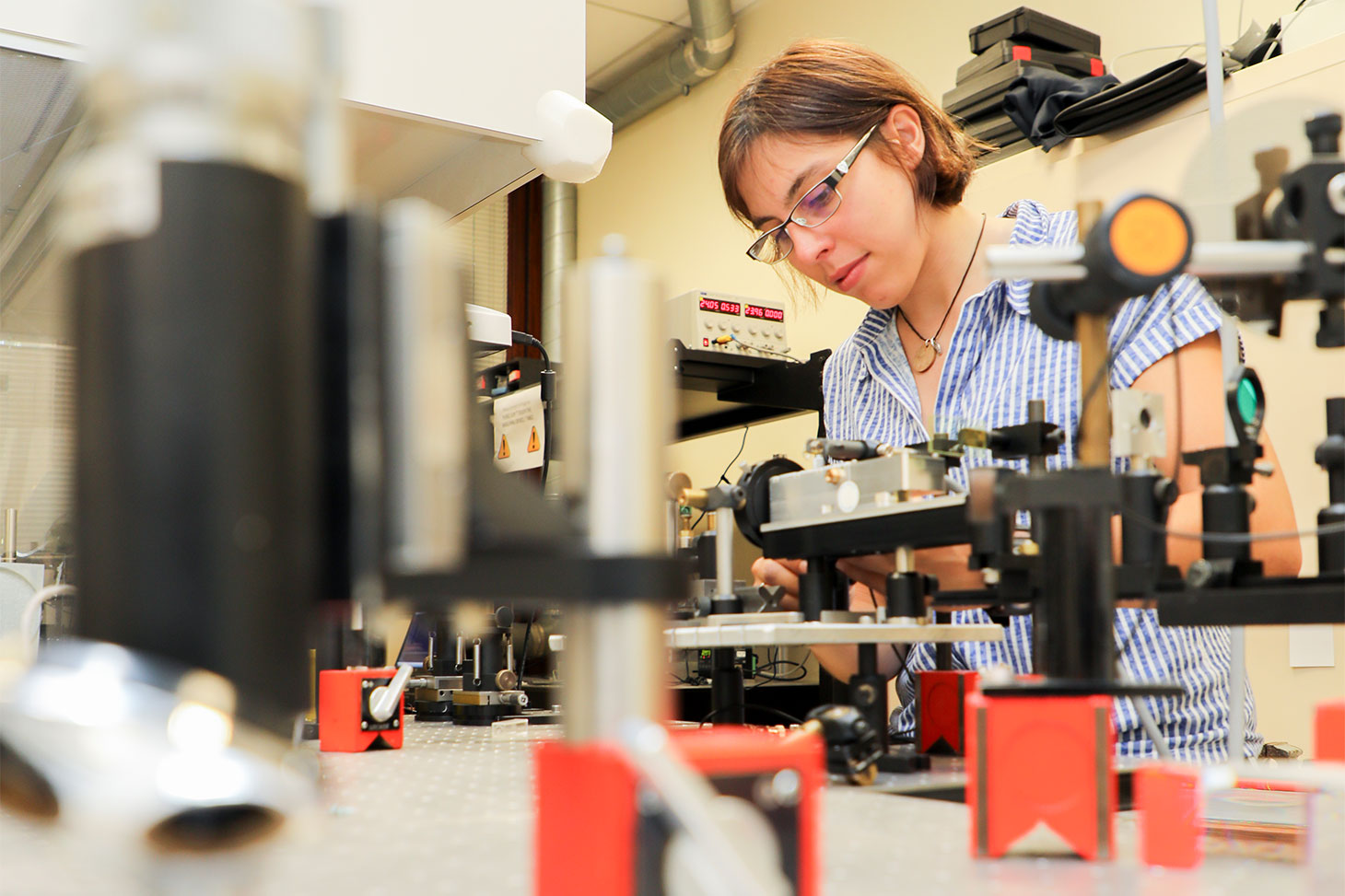
Providing teams with state-of-the-art scientific and technological equipment tailored to their research goals and shared through accessible platforms;
Offering attractive conditions for hosting and supporting young researchers in order to attract and retain the best international talent;
Developing professional research support services covering project development, commercialization, data management, and scientific oversight;
Ensuring high-quality work environments with well-designed spaces, high-performance digital tools, and expert technical support.
Training
To equip society with informed citizens and professionals capable of driving major transitions and reindustrialization.
UGA educates highly qualified men and women who are steeped in scientific and humanistic traditions and are prepared to tackle environmental, digital, and sovereignty challenges, while ensuring its social inclusiveness.
This research- and innovation-based approach prepares graduates to understand and respond to societal changes through personalized learning paths, interdisciplinary study, and active learning.
Prepare citizens and professionals to address global challenges and the issue of national sovereignty
In:
Raising awareness among all undergraduate students about the challenges of ecological transformation and a responsible digital transition, including the uses of artificial intelligence;
Adapting our graduate and postgraduate programs as well as our continuing education programs to meet the needs of various industries in order to address the major challenges of:
the ecological transition;
the digital transition and artificial intelligence;
health and aging;
education and culture;
defense and justice.
Increasing the number of graduates in the technology and engineering fields needed for reindustrialization;
Educating graduates who are able to understand and respond to societal changes through a humanistic education, interdisciplinary approaches, and hands-on experience;
Expanding the international scope of our educational offerings to attract talent to strategic and high-demand fields and provide UGA students with an international and intercultural experience.
Meeting the needs of students and making higher education a pathway to social mobility
In:
Ensuring access and the conditions necessary for the success of students with disabilities through adapted academic arrangements;
Strengthening the regional presence of our educational offerings to ensure broader access to higher education across all regions;
Supporting personalized learning paths to promote diverse forms of success and equal opportunities;
Promoting gender diversity in all fields;
Developing active teaching methods to enhance student engagement and learning;
Continuing to develop multidisciplinary programs to address the complexity of contemporary challenges.
Training Through Research and Innovation
In:
Exposing all graduate students to a research or innovation experience;
Involving researchers in the development and evolution of the educational offerings;
Strengthening researchers' involvement in teaching at all levels;
Training undergraduate and graduate students in entrepreneurship and innovation.
Driving Training Through Quality
In:
Equipping itself with dashboards and decision-making tools;
Strengthening the culture of continuous improvement, particularly through development counseling;
Supporting changes in teaching practices and their spread;
Engaging in strategic dialogue with academic units.
Student Life
To ensure the empowerment and success of every student within a supportive and committed community.
Creating a supportive and inclusive environment—one that combats vulnerability and promotes physical and mental well-being—is the foundation of academic success for all students. Through successful integration and a vibrant student life, each student becomes an active participant in the democratic life of the institution and the community.
Ensuring the Successful Integration of Students
In:
Providing opportunities for integration and social activities throughout the program and upon graduation;
Making it easier for students to complete administrative procedures and access services;
Providing access to culture and cultural practices;
Ensuring that action is taken at all of the university's campuses.
Making the University a Place of Engagement and Citizenship
In:
Promoting student engagement and the development of extracurricular skills;
Strengthening community life;
Fostering student participation in the institution's democratic life.
Promoting Quality of Life and Student Well-Being
In:
Combating all forms of vulnerability (financial, food-related, health-related, and digital) in partnership with the Crous Grenoble Alpes to ensure services tailored to students’ needs, particularly in the areas of social support, housing, and meals;
Fighting against all forms of discrimination, violence, and harassment;
Improving access to care and mental health services;
Promoting access to sports through high-quality programs and facilities.
UGA's Ecological Transformation
To make UGA a model of climate resilience, with operations that have a minimal environmental impact.
In this way, the UGA is securing its future in the face of climate risks while becoming a living laboratory for sustainability and biodiversity conservation. This transformation is reflected in an ambitious reduction in greenhouse gas emissions and the sustainable adaptation of work and study spaces to environmental constraints.
Embedding the ecological transformation at the heart of the UGA's operations
In:
Integrating ecological transformation into the overall strategy of the University and its structures;
Promoting the active participation of students and school staff in environmental projects and decisions;
Establishing the UGA as a place for cultural exchange and action in support of ecological transformation.
Reducing the UGA's Environmental Impact
In:
Drastically reducing greenhouse gas emissions on a path toward carbon neutrality by 2050, with a focus on mobility, responsible procurement, the energy efficiency of our real estate portfolio, and the preservation of biodiversity;
Sustainably managing resources through a responsible procurement policy, reducing consumption (water, energy, raw materials), and promoting the circular economy;
Establishing frugality as a guiding principle for the institution's operations;
Creating the conditions for everyone to take an active role in addressing environmental issues;
Measuring and steering our environmental progress using specific indicators and transparent annual monitoring.
Adapt the work and study environment to environmental constraints
In:
Providing the institution with a strategy for adapting to climate risks, particularly heat waves, droughts, and extreme weather events;
Promoting biodiversity and strengthening the climate resilience of campuses by preserving and expanding natural areas, greening, renaturalization, and reducing soil imperviousness;
Making energy-efficient renovation a top priority in our real estate master plans to improve thermal comfort and reduce energy consumption;
Rethinking workspaces and study areas to adapt them to new uses and climate-related constraints (cooling islands, natural ventilation, bio-based materials).
International
To showcase UGA’s excellence on a global scale and help build European scientific sovereignty.
This influence makes it possible to attract the best international talent and exert significant geostrategic influence, connecting Grenoble’s innovation ecosystem to global decision-making centers through an active contribution to scientific diplomacy.
Contribute to the development of European sovereignty.
In:
Organizing strategic initiatives between Europe and third countries to develop roadmaps for science, training, and shared innovation;
Strengthening the integration of research into European collaborations and increasing the number of certified European projects;
Playing a leading role in science and innovation within European policies, particularly in the industrial and technological sectors;
Promoting citizenship and European values, particularly through European mobility and an increase in the number of Erasmus+ projects.
Strengthen the internationalization of our research and educational programs
In:
Strengthening our involvement in science diplomacy to increase our influence and strategic partnerships;
By strengthening and expanding our strategic partnerships and establishing new ones in priority areas;
Implementing a differentiated influence strategy for the Indo-Pacific, Africa, and the Americas;
Supporting the establishment of and participation in international research units and centers in strategic fields;
Building an active and engaged UGA International alumni network;
Connecting the Grenoble-Alpes innovation ecosystem with other global ecosystems to promote investment and strategic business locations;
Developing short, themed international programs and programs to host international internships, and promoting outbound mobility;
By offering competitive programs to host international students and researchers that are aligned with our geostrategic and scientific priorities, and by facilitating the reception of people in exile.
Promoting the influence of the Francophonie and multilingualism
In:
Strengthening the position of the University Center for French Studies (CUEF) as an international leader in the teaching of French as a foreign language and as a hub for promoting the French-speaking world;
Promoting intercultural understanding and language learning;
Playing a leading role in international Francophone networks;
Strengthening partnerships with French-speaking countries;
Promoting French culture to our partners and their students.
Operational Excellence
To build an effective, agile, and self-reliant organization capable of implementing our strategy and responding promptly to the needs of its users and its missions.
This efficiency is based on the prudent and responsible use of resources, while ensuring the institution's security and resilience.
To be an efficient and streamlined organization
In:
Aligning administrative actions with strategic priorities and user needs;
Implementing an appropriate level of operational subsidiarity;
Fostering professional development and supporting the growth of expertise and the transformation of job roles;
Implementing a quality assurance and continuous improvement approach;
Encouraging initiative, risk-taking, and accountability;
Facilitating cross-functional collaboration and streamlining interfaces.
Achieving a Sovereign and Responsible Digital Transformation at UGA
In:
Developing sovereign digital infrastructure that is resilient to cyberattacks by actively protecting against cyberthreats and prioritizing open-source solutions and data hosting within the country;
Ensuring the resilience of information systems in the event of a disaster;
Educating the entire university community on the challenges and responsible use of digital technology, including artificial intelligence and cybersecurity;
Implementing a policy of digital restraint aimed at reducing the environmental footprint of information systems and digital practices;
Developing user-centered digital services to simplify administrative and educational processes and ensure accessibility for all;
Measuring and steering digital transformation using performance, usage, and environmental impact metrics.
Building Together with the People Who Make Up the UGA
To secure the talent and skills essential to the success of our strategic goals.
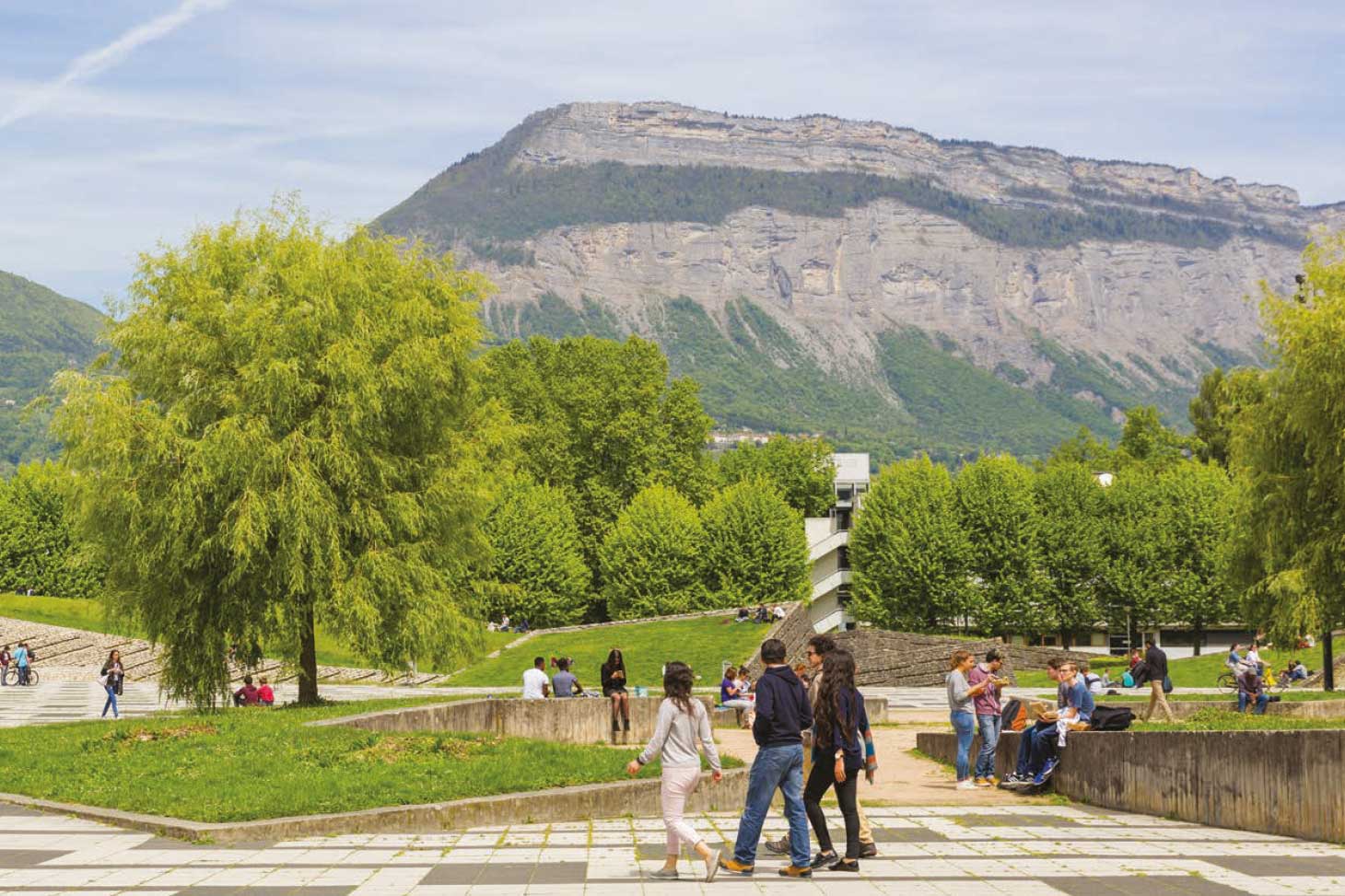
People on the campus at the central square in Saint-Martin-d'Hères.
The personal fulfillment of each and every individual, the richness of diversity, and the strength of social cohesion are the direct drivers of our collective success. A culture of care, rooted in equity and quality of life, ensures the long-term viability of our public service missions as well as the university’s enduring appeal for the benefit of society.
Enhance appeal, attract, and promote talent
In:
Offering attractive onboarding and support conditions to attract and retain talent (researchers, faculty members, and administrative and technical staff) from the very start of their careers;
Creating rewarding career paths with clear opportunities for advancement, opportunities for internal mobility, and easy access to continuing education throughout one's career;
Highlighting the achievements and inspiring stories of the UGA community through targeted communication campaigns and authentic testimonials;
Reducing job insecurity through concrete measures aimed at stabilizing career paths and ensuring job security.
Improving staff quality of life and working conditions
In:
Offering social services tailored to employees’ various life situations (parenting, caregiving, relocation, etc.);
Rethinking the organization of work to meet new trends, employee expectations, and the demands of the ecological transition (remote work, flexibility, collaborative spaces);
Fostering a supportive and empowering management culture through ongoing training for supervisors;
Implementing a plan to prevent psychosocial risks, gender-based and sexual violence, discrimination, and harassment (VSSDH);
Improving physical and structural working conditions.
Strategically Managing Employment and Developing Skills
In:
Making strategic workforce planning and career development a strategic tool to advance UGA’s academic ambitions, for both teaching and research staff and BIATSS personnel;
Developing a decision-support information system that enables strategic and predictive management of jobs, skills, and human resources;
Supporting the changes brought about by the ecological transformation and the digital transition, as well as by the evolving mission of the university;
Strengthening continuing education and skills development programs to enable everyone to grow and adapt to new challenges, in particular by developing a training program for managers;
Developing an internal mobility policy that promotes diverse career paths and the enhancement of skills;
Simplifying, modernizing, and digitizing HR processes to improve efficiency, service quality, and the professionalism of our teams.
To set an example in the areas of inclusion and diversity.
In:
Promoting professional equality between women and men at all levels of responsibility and in all occupational fields;
Implementing a proactive policy to welcome and support employees with disabilities, from recruitment through their career development;
Actively combating all forms of discrimination and inequality based on origin, sex, age, sexual orientation, gender identity, or social status.
Science - Culture - Society
To help our students and staff become informed citizens who are open to the world, its beauty, and its diversity.
The UGA ensures broad, inclusive, and high-quality access to artistic practices and expressions, and is committed to democratizing knowledge, combating misinformation and obscurantism, fostering critical thinking, and sparking curiosity. By fostering an informed public debate, the university enables citizens to participate in major societal decisions with full knowledge of the facts and prepares future generations of scientists to meet the challenges of the future.
Opening the university to the community and promoting UGA’s artistic and scientific heritage
In:
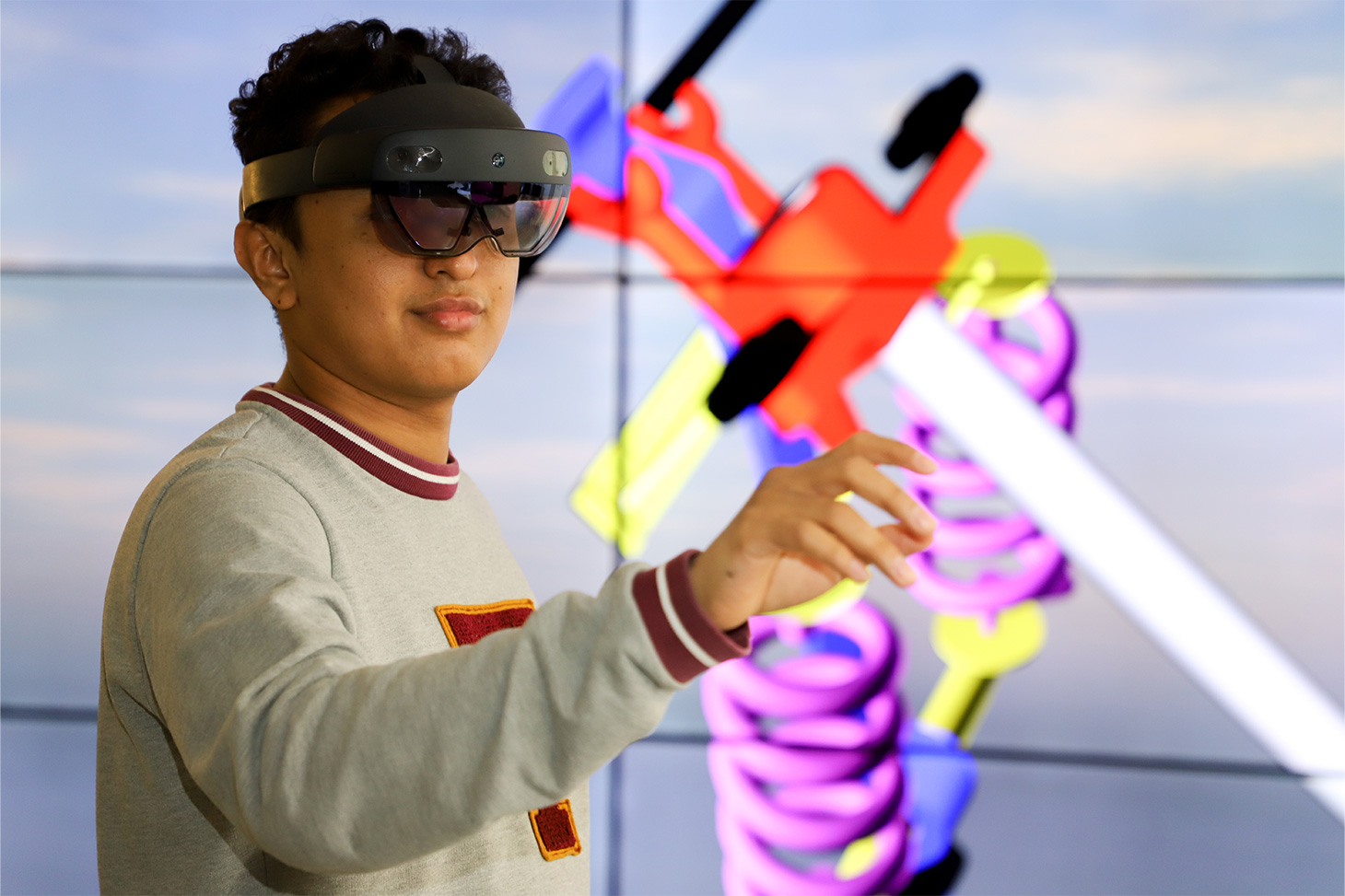
Developing innovative visitor experiences that showcase artistic, scientific, and natural heritage, enhanced by immersive digital tools (augmented reality, dedicated apps);
Expanding the range of lectures and public debates, particularly on the intersection of science and society and major contemporary issues;
Offering an ongoing cultural and scientific program that brings together the arts and sciences throughout the year;
Turning our heritage —artistic, scientific, technical, and natural—intodynamic tools for engagement to spark curiosity and share knowledge;
We are developing partnerships with local cultural, community, and educational organizations to amplify the impact of our outreach initiatives.
Promoting Access to Culture
In:
Providing optimal conditions for the development of student and community-based artistic activities (dedicated spaces, equipment, support);
Offering a rich, diverse cultural program accessible to all —performances, exhibitions, concerts, and film screenings—that allows everyone to broaden their cultural horizons;
Strengthening partnerships with local cultural organizations to facilitate the university community's privileged access to cultural institutions and events.
Encouraging Vocations
In:
Encouraging interactions between researchers and schoolchildren through classroom presentations, laboratory tours, and science discovery workshops;
Collaborating with the Center for Scientific, Technical, and Industrial Culture (CCSTI) “Territoire de sciences” and local educational stakeholders to develop content and science outreach initiatives;
Showcasing science in action through immersive stories that depict researchers' daily lives, their questions, and their discoveries;
Developing support programs for talented young people from underrepresented backgrounds in science fields.
Notes:
Scientific truth.
Université Grenoble Alpes is ranked first among European universities in terms of the number of patent applications filed with the European Patent Office. It is regularly ranked first among French universities by the National Institute of Intellectual Property (INPI) and is among the top three most innovative public institutions.
European Synchrotron Radiation Facility (ESRF), Institut Laue-Langevin (ILL), European Molecular Biology Laboratory (EMBL), National Laboratory for High-Intensity Magnetic Fields (LNCMI), Institute for Millimeter Radio Astronomy (IRAM).
Published on March 26, 2026 Updated on April 17, 2026
Share the linkCopyCopiedClose the modal windowShare the URL of this pageI recommend this page:Available at this address:The page will then be accessible from your "My Favorites" menu.Stop the videoPlay the videoMutePlay audioChat: Have a question?Robo Fabrica ChatbotMatomo Traffic StatisticsX (formerly Twitter)